
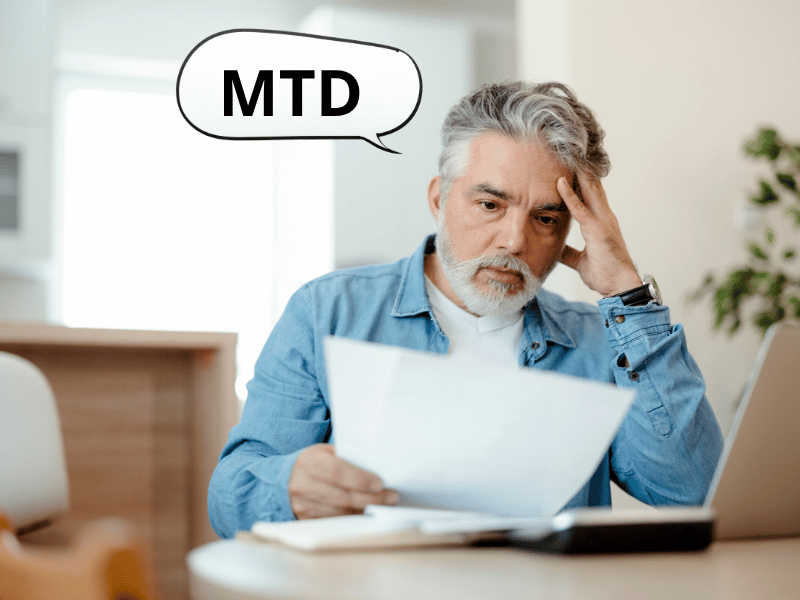
Making Tax Digital for Income Tax has been mandatory since April 2026 for qualifying incomes above fifty thousand pounds. Many taxpayers assume that disliking digital tools or preferring paper records is enough to qualify for an exemption. HMRC takes a different view. The exemption framework is structured, hierarchical and narrow by design.
Understanding which category applies to your situation is therefore not straightforward. Taxpayers who miss quarterly update deadlines without an approved exemption face compliance exposure from the very first submission window.
Get a FREE consultation – CLICK
Making Tax Digital Exemptions: The Complete Guide to Who Qualifies and Why:
- What Does a Making Tax Digital Exemption Actually Mean?
- Who Falls Outside the Scope of Making Tax Digital Entirely?
- Who Receives an Automatic MTD Exemption Without Applying?
- Which Automatic MTD Exemptions Are Temporary and What Happens After April 2027?
- What Does HMRC Define as Digital Exclusion?
- What Does HMRC Explicitly Reject as a Reason for MTD Exemption?
- Can You Be Exempt From MTD for One Income Source but Not Another?
- Does a VAT Exemption From MTD Transfer Automatically to Income Tax?
- How Do You Apply for a Making Tax Digital Exemption?
- What Happens If HMRC Rejects Your MTD Exemption Application?
- Are You Looking for an Accountant in Medway to Assess Your MTD Position?
- Frequently Asked Questions
What Does a Making Tax Digital Exemption Actually Mean?
An MTD exemption does not remove your obligation to report income and tax to HMRC. It removes only the requirement to do so using MTD – compatible software. If HMRC grants you an exemption, you continue to file a Self Assessment tax return as normal. The exemption changes the tool, not the obligation itself.
Additionally, exemptions do not affect payment deadlines. Those remain fixed at 31 January and 31 July regardless of your exemption status. Many taxpayers confuse an exemption from Making Tax Digital with relief from broader tax obligations. That confusion creates its own risk.
Who Falls Outside the Scope of Making Tax Digital Entirely?
Before examining exemptions, it is worth identifying who is simply outside the scope of MTD altogether. Companies are not affected by MTD ITSA, as there are currently no plans to extend it to Corporation Tax. Partnerships and Limited Liability Partnerships are also outside scope for now, though this is expected to change in future.
However, individual partners with separate qualifying income as sole traders or landlords may still fall within MTD personally. Knowing the difference between being outside scope and being exempt matters. Outside scope requires no application and no communication with HMRC. An exemption, by contrast, must either apply automatically or be actively applied for.
Who Receives an Automatic MTD Exemption Without Applying?
Several categories of taxpayer receive automatic exemption from Making Tax Digital without needing to contact HMRC. The broadest is income-based: if your qualifying income is twenty thousand pounds or below, you are automatically exempt. No application is required and no notification needs to be sent. Additionally, taxpayers without a National Insurance number are automatically exempt. This applies to any tax year in which they lack one on 5 April.
Further automatic exemptions cover specific roles, provided the relevant circumstances appeared in the 2024 to 2025 tax return. Qualifying roles include Lloyd’s underwriters and ministers of religion. Recipients or transferors of the Married Couple’s Allowance or Blind Person’s Allowance also qualify. Trustees and personal representatives are also automatically exempt, but only in respect of income arising directly from those roles.
Get a FREE consultation – CLICK
Which Automatic MTD Exemptions Are Temporary and What Happens After April 2027?
A separate category of automatic exemption applies only until April 2027. These are not permanent and do not protect a taxpayer beyond the 2026 to 2027 tax year. Where the relevant circumstances appeared on the 2024 to 2025 tax return, the exemption applies automatically for 2026 to 2027. Qualifying circumstances include income from trusts or estates received as a beneficiary. Farmers and creative artists claiming averaging relief also qualify. Foster carers claiming qualifying care relief qualify too.
Additionally, taxpayers needing to file non-residence supplementary pages SA109 are covered, as are visiting performers with other UK qualifying income. The end of a temporary exemption does not mean MTD obligations are deferred further. Where qualifying income exceeded thirty thousand pounds in 2025 to 2026, MTD obligations begin from April 2027. Taxpayers who relied on a temporary exemption without preparing for that transition carry meaningful risk going forward.
What Does HMRC Define as Digital Exclusion?
Digital exclusion is the only route to a permanent applied exemption. It applies to those who do not qualify under the categories above. HMRC defines it narrowly. The test is whether it is reasonably practicable to use compatible software to keep records or submit updates. Three qualifying reasons are recognised. Age or health conditions preventing use of computers, tablets or smartphones qualify. Location in an area with no reliable internet access, where no suitable alternative is available, also qualifies. Membership of a religious society whose beliefs are incompatible with digital communications qualifies as well.
The standard applied is strict. Where an agent, family member or friend could help meet Making Tax Digital requirements, HMRC will likely refuse the application. Available assistance undermines the digital exclusion argument entirely.
What Does HMRC Explicitly Reject as a Reason for MTD Exemption?
HMRC publishes a clear list of reasons it will not accept as grounds for exemption from Making Tax Digital. Preference for paper records does not qualify. Unfamiliarity with accounting software does not qualify either. The cost of software is not accepted as a reason, particularly given that free and low-cost MTD-compatible options exist. Having a small number of digital records to create each year is also insufficient.
Finding the process inconvenient or time-consuming does not qualify. Previously filing paper Self Assessment returns does not qualify. Each of these points appears explicitly in HMRC guidance. Accountants in Medway and across Kent are seeing clients with exemption expectations that will not survive scrutiny. Knowing this before submitting an application prevents the dangerous assumption that an exemption is in place when it is not.
Can You Be Exempt From MTD for One Income Source but Not Another?
This is one of the most misunderstood aspects of the Making Tax Digital exemption framework. Certain exemptions apply to specific activities rather than to the taxpayer as a whole. Consider a foster carer with qualifying care income and a separate rental property. That person may be exempt from MTD for the foster care activity. The rental income, however, remains fully subject to MTD. Identical logic applies to trustees and personal representatives.
Those who hold qualifying income in a personal capacity above the MTD threshold remain within MTD for that personal income. Visiting performers with other UK-source qualifying income face the same partial exposure. Receiving an activity-based exemption therefore does not automatically mean full relief from MTD. Each income source requires its own separate assessment.

Does a VAT Exemption From MTD Transfer Automatically to Income Tax?
It does not. This is a direct and common misconception. Taxpayers granted exemption from MTD for VAT on grounds of digital exclusion must contact HMRC separately. Only then can they confirm whether those same grounds apply to Making Tax Digital for Income Tax. HMRC will not transfer the exemption without contact.
There is one further complication. A VAT exemption granted because of an insolvency procedure does not transfer to MTD ITSA. This applies under any circumstances. In that case, even contacting HMRC will not result in an income tax exemption. Separate professional advice is needed to assess the position correctly.
How Do You Apply for a Making Tax Digital Exemption?
Applications for MTD exemption can be made by phone or in writing. Both the taxpayer and their authorised agent can apply. Written applications must use a specific subject line. For digital exclusion cases, use the subject line: Making Tax Digital for Income Tax, digitally excluded application. All other exemption categories require: Making Tax Digital for Income Tax, exemption application.
HMRC aims to respond within 28 days. Taxpayers required to join MTD from April 2026 should apply urgently if they have not already done so. The first quarterly update deadline falls on 7 August 2026. Any exemption should be confirmed before that date. While awaiting a decision, continue preparing for MTD compliance in case the application is refused.
What Happens If HMRC Rejects Your MTD Exemption Application?
A rejected application can be challenged through a formal written appeal within 30 days of the decision date. Address the letter to the office shown in the decision. For digital exclusion appeals, title the letter: Making Tax Digital for Income Tax, digitally excluded appeal. All other exemption appeals use: Making Tax Digital for Income Tax, exemption appeal. Include any new evidence that supports your case.
While the appeal is under review, HMRC’s original decision remains in force. MTD obligations therefore continue unless and until the appeal succeeds. Preparing for digital compliance during this period is not optional. Where the appeal fails, the taxpayer must use MTD-compatible software from the point the original obligation began. HMRC has confirmed a soft landing for 2026 to 2027. No penalty points are being issued for late quarterly updates during that first year. From 2027 to 2028 onwards, the full points-based penalty system applies.
Are You Looking for an Accountant in Medway to Assess Your MTD Position?
Business owners, sole traders and landlords in Medway, Chatham, Rainham and across Kent need to review their MTD position now. Many taxpayers across the region are operating under a mistaken assumption about their exemption status. Lidertax, accountant Medway, works with clients across Kent to assess each situation individually.
We identify whether an automatic exemption applies. Where no exemption fits, we plan the right approach to full MTD compliance. Getting this wrong carries real consequences. Missing a quarterly update deadline without an approved exemption creates immediate compliance exposure. Contact Lidertax at our Chatham office to review your MTD position before the next submission window. Acting early preserves more options.
Making Tax Digital exemptions are more structured and limited than most guidance suggests. The difference between being outside scope, automatically exempt and requiring an application is not academic. It has direct consequences for compliance deadlines. An activity-based exemption does not always mean full relief from MTD obligations. Each income source requires its own assessment. Speaking to a qualified accountant in Medway before the next quarterly deadline is the most effective first step if you are uncertain about your position.
Frequently Asked Questions
Who is automatically exempt from Making Tax Digital without applying?
Taxpayers with qualifying income of twenty thousand pounds or below are automatically exempt. Those without a National Insurance number, Lloyd’s underwriters, ministers of religion, and recipients of Married Couple’s Allowance or Blind Person’s Allowance are also automatically exempt if those circumstances appeared in their 2024 to 2025 tax return.
Does being digitally excluded automatically grant an MTD exemption?
No. You must apply to HMRC and demonstrate that using compatible software is not reasonably practicable. If assistance is available from an agent, family member or friend, HMRC is unlikely to approve the application on digital exclusion grounds.
Can HMRC reject an MTD exemption application?
Yes. HMRC rejects applications where the stated reason does not meet the digital exclusion criteria. Preferring paper, finding software inconvenient or costly, and having a small number of transactions are explicitly listed as insufficient grounds.
Does a VAT exemption from MTD automatically apply to income tax?
No. The two exemptions are separate. Taxpayers with an existing MTD VAT exemption must contact HMRC individually to confirm whether those grounds apply to Making Tax Digital for Income Tax.
What happens when a temporary MTD exemption expires in April 2027?
If your qualifying income exceeded thirty thousand pounds in the 2025 to 2026 tax year, Making Tax Digital applies from April 2027. The temporary exemption does not extend compliance deadlines beyond that point automatically.